
You might not see them, but volatile organic compounds are all around you. These gases come from thousands of everyday products in your home. Paints, cleaners, and even new furniture release them into your air. According to the EPA, concentrations of many VOCs are up to ten times higher indoors than outdoors. That is a big deal for your breathing space. Understanding what these chemicals are helps you protect your family. We are here to break it all down in simple terms you can actually use.
What Are Volatile Organic Compounds?

Volatile organic compounds are a group of carbon-based chemicals. They turn into gases at room temperature. That is why they are called “volatile.” Most VOCs have a strong odor, which may be sweet and pleasant or foul and unpleasant. Some you can smell easily. Others have no scent at all. This makes them tricky to detect without testing.
These chemicals are found in countless products. Paints, varnishes, and wax all contain organic solvents. So do many cleaning, disinfecting, cosmetic, degreasing, and hobby products. Even fuels are made up of volatile organic compounds. They release gases while you use them and even during storage. The variety of these chemicals is huge. Some are harmless. Others can cause real problems for your well-being.
Common Sources of VOCs in Your Home
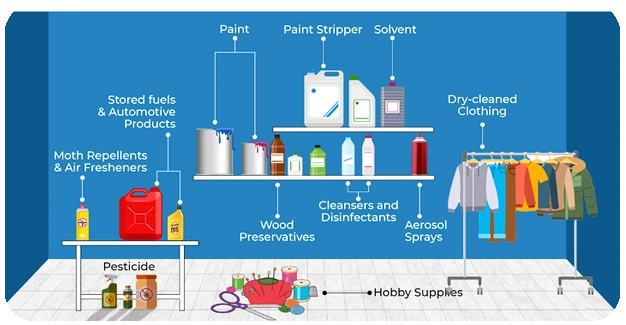
VOCs are emitted by a wide array of products numbering in the thousands. Your home is full of items that release these gases daily. Building materials and furnishings are major contributors. New carpets, pressed wood furniture, and vinyl flooring all off-gas volatile organic compounds. The “new smell” you notice? These chemicals often enter your air.
Household products are another big source. Paints and lacquers, paint strippers, cleaning supplies, and pesticides all contain them. Even office equipment like printers and copiers releases these gases. Permanent markers, glues, and correction fluids add to the mix. Really, any room in your house likely has multiple sources releasing volatile organic compounds right now.
Indoor VOCs From Everyday Products
Let us talk about some specific items you use daily. Your morning routine probably involves several of them. Cosmetics, hairspray, and personal care products can release these gases. Cleaning sprays and air fresheners are common culprits, too. Even scented candles emit volatile organic compounds when burned.
Here are some common indoor sources to watch for:
- Nail polish remover and furniture polish
- Dry-cleaned clothing that still contains chemical solvents
- Art and craft supplies like glues and aerosol paints
- Cooking activities like frying or broiling foods
- New furniture and flooring that has not fully off-gassed
These products can release organic compounds while you are using them. They also release gases to some degree when stored. That unopened can of paint in your garage? It might be leaking fumes, too.
Health Effects of Volatile Organic Compounds
The effects on your body depend on the type of chemical. Exposure level and duration also matter. Common symptoms of exposure to high levels include eye, nose, and throat irritation. Headache, nosebleed, fatigue, nausea, and dizziness can also occur. Some people experience skin reactions like itching or rashes.
The ability of volatile organic compounds to cause health effects varies greatly. Some are highly toxic. Others have no known impact at all. Benzene is known to cause leukemia. Formaldehyde is linked to cancer of the nose and throat. These are serious concerns that deserve attention. Reducing your exposure is smart for everyone.
How VOCs Impact Human Health Over Time
Short-term exposure often causes immediate irritation. These symptoms usually fade once exposure stops. But what about breathing in low levels every day? Breathing in low levels of VOCs for long periods may increase some people’s risk of health problems. That is why long-term exposure matters.
People with respiratory problems such as asthma may be more susceptible. Young children, the elderly, and those with chemical sensitivities face higher risks, too. Children may have worse outcomes after exposure because they are still developing. Pregnant women should also be careful. Some volatile organic compounds may affect fetal development. Protecting human health means limiting daily exposure as much as possible.
VOCs and Indoor Air Quality
Here is a startling fact. EPA studies found levels of about a dozen common organic pollutants to be 2 to 5 times higher inside homes than outside. This was true regardless of location. Rural homes and urban homes showed similar results. Your indoor air quality is probably worse than you think.
We spend 90% of our time indoors, and most of that time is spent in our homes. This makes controlling volatile organic compounds crucial for indoor air quality. Poor ventilation makes things worse. Modern homes are built tight for energy efficiency. But this traps gases inside. Opening windows helps. Using exhaust fans in kitchens and bathrooms makes a difference, too.
Health and Environmental Concerns of VOC Exposure
Volatile organic compounds do not just affect you personally. They have broader impacts. Indoor VOCs react with ozone even at low concentrations. These reactions produce sub-micron particles and harmful by-products. Some sensitive people may experience adverse effects from these reactions.
VOCs also contribute to environmental issues like tropospheric ozone formation. They play a role in smog creation outdoors. There are no federal or state standards for VOC levels in non-industrial settings. This puts the responsibility on you. Being aware of what products you bring home matters. Choosing low-emission options protects both your family and the environment.
Improving Your Air Quality by Reducing Volatile Organic Compounds

You have the power to make your home safer. Source control is key – minimize the use of VOC-containing products and materials. Only buy what you actually need. Leftover paints and solvents sitting around can leak fumes. Store them in a garage or shed away from living spaces. Better yet, dispose of unused chemicals properly.
Increasing the amount of fresh air in your home will help reduce the concentration of VOCs indoors. Open doors and windows regularly. Use fans to maximize airflow from outside. Look for products certified by organizations like Green Seal or GREENGUARD. These meet low-emission standards. Consider air purifiers with activated carbon filters, too. They can help neutralize volatile organic compounds in your breathing space. Small changes add up to big improvements for your family’s wellness.